What began as a public place where people – normally men – could gather for a congenial drink, warmth, and stimulating conversation, evolved over the course of a few decades into a social phenomenon that helped shape the growing Empire.
Early in their history, beginning in the 17th century, there were more than 2000 of these places across London. What was more impressive than this number were the changes they brought to the way in which the City reacted to the news of the day and communicated with the wider world.
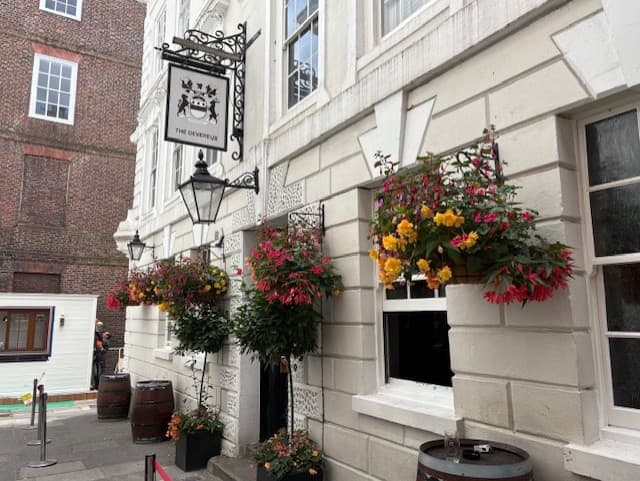
At one time one of London’s famous coffee houses, today’s Devereux pub was the site of the first TimeTable podcast
The obvious stimulation was the caffeine hit that came within the shortest visit to a coffee house. As a group, they represented a place of relative safety in which patrons – often distinguished by membership of a particular profession such as the law, medicine, finance, or journalism – could absorb and assimilate current developments, argue them through, and look forward to an early return.
The more stimulating venues conferred a wonderful name for the wider community of coffee houses: they served as “penny universities” every bit as vibrant as today’s training videos on YouTube, where people are exposed to vast swathes of creditable information in a short period of time.
They were never universally popular and indeed met initially with resistance from powerful people: King Charles II tried to shut them down due to perceived political threats, but even he had to bow to the waves of progress by third-party forces beyond even his control.
The explosive growth of printing technology led to a spread of information which, in terms of reach, intensity, and quality was more than any state force could resist – not unlike the pressures we see today with social media and the phenomena of Artificial Intelligence and disinformation.
Many coffee houses became associated with specific trades and interests, like the Jerusalem Coffee House for East India trade and Lloyd's Coffee House for maritime information. More than just social hubs, they played a role in the development of journalism and literary movements, with titles like the Tatler and Spectator drawing heavily on coffee house chatter much like the pub conversations of later centuries.
Several coffee houses evolved into the pubs and taverns we know and love today. One of the more famous examples is to be found just outside Middle Temple, off Strand: The Devereux pub was formerly the Grecian Coffee House, much frequented by Sir Isaac Newton and his co-founders of The Royal Society. A back corner of today’s Devereux is something of a shrine to this iconic figure in Britain’s history, and is where the TimeTable team recorded its very first podcast in the TimeTable series.